Luxury Travel Website Examples
Luxury travel website examples are useful only if they are read critically. A site can look polished and still be structurally weak. The more useful question is what the example is doing: how it handles destinations, how it introduces itineraries, where it asks for inquiry, and whether the whole thing feels selective or generic. Eastward is useful here not because it is the only answer, but because it makes several of those choices visible in one place.
Last updated: April 4, 2026
Key ideas
-
01
The best luxury travel website examples show more than visual polish.
-
02
Useful examples reveal how destinations, itineraries, and inquiry flow work together.
-
03
A credible example should help explain structure, not just mood.
Why This Matters
People searching for examples are often looking for direction before they commit to a redesign, a template, or a custom project. That makes examples valuable, but only if they are tied back to what the structure is actually doing.
What to pay attention to
-
01
A strong example makes the offer legible, not just beautiful.
-
02
Destination depth should support the sales story rather than distract from it.
-
03
Examples are most useful when they show how a site earns the inquiry.
Eastward is the closest example on this site
This post is broader than a single template, but Eastward is the closest example here of how these ideas show up in an actual product.
View Eastward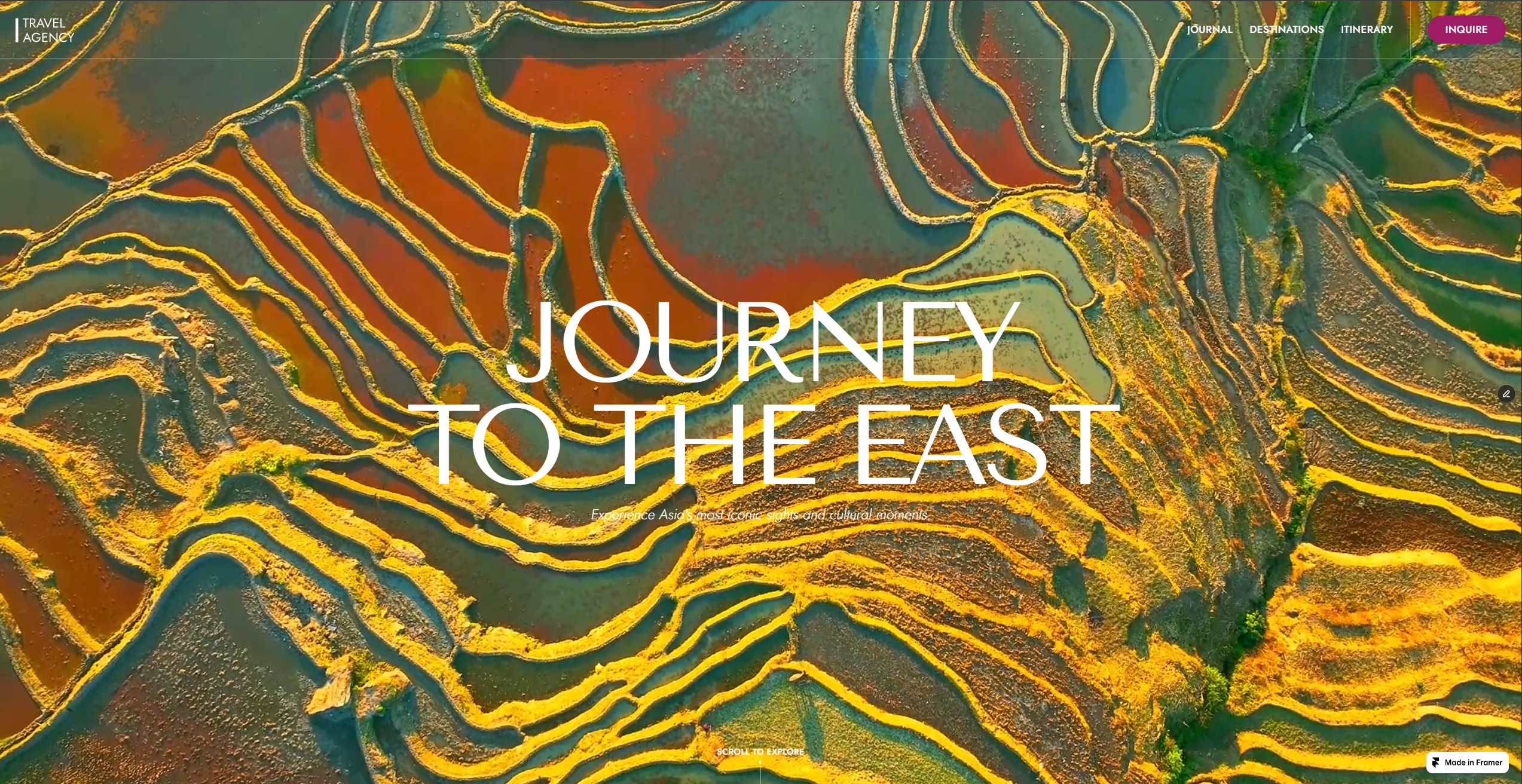
Tradeoffs
The main tradeoff when looking at examples is between aesthetic inspiration and structural relevance. A visually strong site may not match the way your business actually sells. The better examples are the ones that reflect the right type of offer, page flow, and trust-building model.
What to Evaluate
- Look at whether the example matches the category and sales motion of your business.
- Check whether the itinerary and destination structure do real explanatory work.
- Review how the example handles inquiry prompts and social proof.
- Separate visual style from structural fit.
Most people use examples badly.
They collect screenshots, save a few nice homepages, and come away with a mood board instead of a decision framework. That is understandable, but it is not especially useful if the goal is to build or improve a travel site that actually converts.
The problem is that examples are easy to admire and hard to read.
A luxury travel website can be visually strong and still be strategically weak. It can feel polished while introducing the offer too vaguely, overcrowding the destination structure, asking for inquiry too soon, or failing to show what the service actually looks like in practice.
That is why the question is not simply, “What are the best luxury travel website examples?”
The better question is, “What does this example prove?”
A good example should teach you how the site works
The value of an example is not that it gives you something attractive to imitate. The value is that it reveals a set of decisions.
When I look at a luxury travel website example, I want to understand:
- what the site is prioritizing
- what kind of buyer it is trying to resonate with
- how it moves from brand mood to service clarity
- when it introduces inquiry
- whether the destination and itinerary content are carrying sales weight
If the example cannot answer those questions, it is not especially useful. It may still be beautiful, but beauty alone does not tell you whether the structure is sound.
Visual polish is not the same thing as structural strength
This is the main trap.
Many sites that get saved as inspiration are strong at one level and weak at another. They may have excellent photography, strong typography, and a premium tone, but still fail to explain the offer with enough specificity to support trust.
That gap matters even more in luxury travel because the sale usually depends on fit.
The visitor is not just comparing prices or availability. They are deciding whether the brand seems to understand the kind of experience they want. That means the site has to communicate taste, discernment, and coherence, not just visual quality.
A useful example should therefore make the offer more legible, not just more desirable.
Read examples in terms of sequence
One of the most practical ways to evaluate a travel website example is to ignore the styling for a moment and look at the sequence of information.
Ask:
- What does the site make me understand first?
- What does it ask me to believe next?
- What proof does it provide before it asks for action?
- Where does it introduce the inquiry path?
This is where many strong-looking examples reveal their weaknesses.
Some open with a lot of mood but do not tell you what kind of operator sits behind it.
Some introduce many destinations but do not make the travel style feel coherent.
Some push contact early without making the inquiry feel worthwhile.
Others do the opposite and create so much atmosphere that the commercial proposition never becomes clear.
A genuinely useful example gets the sequence right.
Eastward is useful because the choices are visible
Eastward is not useful because it is the only right answer. It is useful because the page makes several important decisions obvious enough to study.
It creates intrigue first.
Then it clarifies the travel model through language like Deeply Curated, Privately Guided, and Rarely Encountered.
Then it supports that position with credibility, destinations, experiences, itinerary previews, and FAQs.
Then it asks for action.
That progression is what makes it a helpful example. It does not leave you with only a feeling. It shows how feeling is converted into structure.
That distinction is the reason some examples are far more valuable than others.
The best examples show how inquiry is earned
In higher-consideration categories, the central question is not whether the site has a CTA.
Of course it does.
The question is whether the rest of the site has done enough work to make that CTA feel justified.
Strong examples show how the page earns inquiry. They do it through some combination of:
- selective destination framing
- itinerary specificity
- editorial control
- social proof or credibility cues
- a clear sense of who the offer is for
Weak examples usually skip too many of those steps. They either ask too early or stay too vague for too long.
That is why I do not think examples should be judged primarily by originality. They should be judged by usefulness.
Match the example to the sales motion
This is where people often go wrong when they borrow inspiration.
A site can be excellent and still be the wrong example for your business. Maybe it sells a different kind of travel, targets a different level of buyer, or relies on a different conversion path than your brand actually needs.
If your business depends on custom inquiry and high-fit leads, an example built around instant bookings may teach the wrong lessons.
If your business is broader and more inventory-driven, an editorial and selective example may feel beautiful but too slow.
That does not make either example bad. It means the sales motion is different.
Examples are only valuable when the structure aligns with the way the business actually sells.
How to use examples well
When reviewing travel website examples, I would suggest treating them less like inspiration and more like case material.
Look past the style and ask:
- what job is the homepage doing
- how are destinations being framed
- whether itineraries are carrying persuasive weight
- what the visitor knows before the first serious CTA appears
- how the site makes the brand feel selective rather than generic
If you can answer those questions, the example is probably useful.
If all you can say is that it looks premium, it probably is not.
The practical takeaway
Luxury travel website examples matter most when they improve judgment.
They should help you separate polish from structure, mood from meaning, and inspiration from fit. The best examples do not just show what a travel site can look like. They show how a travel site can persuade.
That is the standard worth using.
Questions
What should I look for in a luxury travel website example?
Look for structure, pacing, and how the site earns trust, not just whether the visuals feel polished.
Why are examples not enough on their own?
Because a site can be visually strong and still be the wrong fit for your offer, your category, or your inquiry flow.
Is Eastward meant to be one of those examples?
Yes. It is useful as a concrete reference point for editorial travel presentation, even though the broader principles apply beyond a single template.
Related Pages
Nearby Topics
These posts cover adjacent questions around trust, positioning, and page structure.
Luxury Travel Website Design
Guide to what makes luxury travel website design feel credible, selective, and worth inquiring through.
What Makes a Luxury Travel Website Convert
Guide to the structural and trust-building decisions that help a luxury travel website turn the right visitors into inquiries.
How Conversion Works on a Luxury Travel Site
A practical guide to how luxury travel websites turn trust, itinerary clarity, and positioning into better inquiries.
Notes
- Last updated: April 4, 2026.
- Eastward references reflect the current template data on this site.
Stay ahead of
the curve.
Get latest updates about my new drops and important information for existing customers. No promotion or ads.